
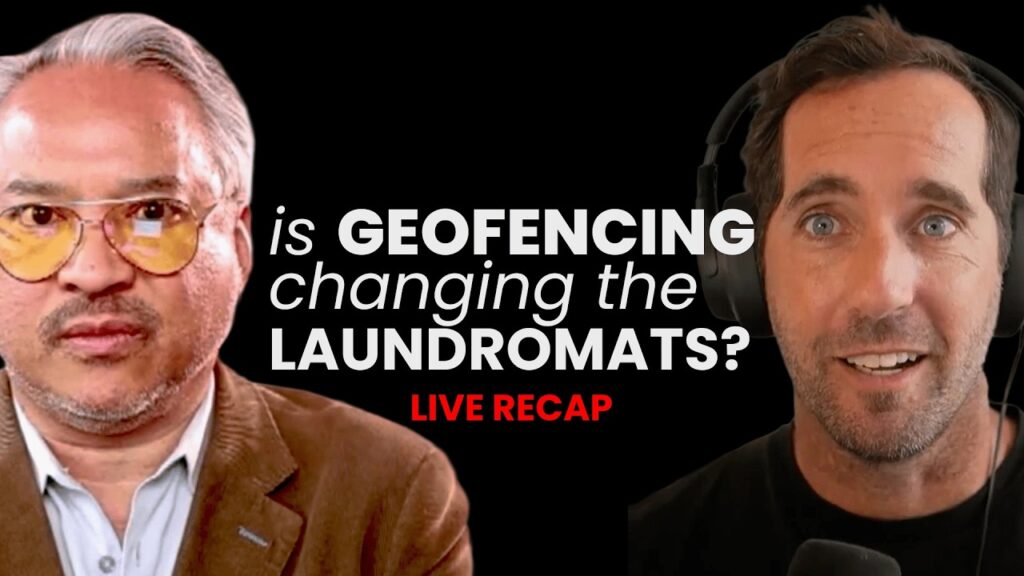
Welcome to the Laundromat Resource podcast! In this episode, host Jordan Berry is joined by Ernesto Cullari, partner at Cullari and Wardell, a geofencing ad agency and full-service AI lab. Together, they dive into the transformative role of AI and automation in the laundromat industry, discussing everything from geofencing and language detection to active AI systems that unify business tools and streamline customer experience.
Ernesto Cullari shares practical insights on leveraging data, automating communication, and integrating advanced technology into day-to-day laundromat operations—making your business more efficient and customer-focused than ever before. Tune in for real-world applications, live demos, and actionable strategies that can elevate your laundromat above the competition in today’s rapidly changing, tech-driven landscape
1. AI as a Force Multiplier, Not a Job Killer
Both Jordan Berry and Ernesto Calleri emphasized that AI should be seen as a “force multiplier” for laundromat employees, not a threat to their jobs. When properly integrated, AI solutions—such as chat agents on websites, phone agents, and point-of-sale integrations—can automate routine and repetitive tasks (like answering balance inquiries or managing customer communications), allowing employees to focus on providing excellent in-person service and addressing more complex customer needs. This makes the business more efficient and improves the customer experience (07:42, 06:32).
2. Unified and Automated Customer Engagement
The integration of AI across multiple channels—website chat, phone, advertising, Wi-Fi systems—ensures a seamless customer experience and maximizes every engagement opportunity. Ernesto Calleri highlighted practical tools such as Wi-Fi capture pages that not only provide internet access to customers but also collect valuable customer data, consent for marketing, and Google reviews—all automatically. These unified platforms make marketing and customer retention more effective and remove reliance on siloed, disconnected tools (09:51, 13:27, 14:23).
3. Personalization through Language and Geo-Targeting
Modern AI tools can automatically detect and engage customers in their preferred language, and landing pages or ads can be personalized to show the nearest laundromat location based on geolocation. This ensures that every potential customer, no matter their language or location, gets clear, relevant information, improving their likelihood to visit and boosting conversions. These capabilities—which were recently only available to large enterprises—are now accessible and practical for laundromat owners who want to stay ahead of the curve (16:09, 20:11, 21:16).
Summary:
AI in laundromats is about amplifying your team’s abilities, creating automated and unified ways to engage and retain customers, and using advanced personalization (language/geolocation) for better service and higher conversion—all of which are accessible and increasingly essential in today’s market.
Ready to Take the Next Step?
Check out Laundromat Resource for free courses, podcasts, community forums, and expert consulting—all from Jordan Berry , one of the industry’s leading voices. The opportunity in laundromats is real—whether you’re looking for stable cash flow, a business with meaning, or building wealth with real estate.
If you found these tips helpful, share them—and stay tuned for more industry insights from Laundromat Resource.
Connect with Ernesto & Barbara:
To book a call:
- https://calendar.app.google/oT2pvzGDkzy8xrju7
- 732-939-5790
Check out LUKE: luke.care
Resources and Links:
Make sure to watch the latest Laundromat Podcast Episode 247
Jordan Berry [00:00:02]:
Hey. Hey, everybody. We, I believe, are live in, in person here. Hey, what’s up? I’m Jordan with Lawnmower Resource, and I’m gonna pull up the chat right now and see if we’re going. So if you’re out there and you can hear me, let me know. Let me know.
Ernesto Cullari [00:00:21]:
Like world of worlds. If anybody can hear me.
Jordan Berry [00:00:25]:
If anybody can hear me, are you out there? Yeah. Yeah. Let us know. And welcome. Also let us know where you’re, where you’re ch. In from around the world. I currently am. I’m in Hawaii and I am staring at a really good wave right now that I’ve been dying to get on all day.
Jordan Berry [00:00:42]:
It’ll probably, yeah, it’ll probably flatten out by the time I finish up for the day, but yeah. Here with Ernesto from Kari and Wardell, recent guest on the podcast. We’ve got a lot of stuff to talk about today and we had a lot to talk about on that podcast interview. But Ernesto, why don’t you introduce yourself real quick and, and then we can jump into it. And real quick, if you caught that episode and you’re here and you’re actually out there and you have a question regarding AI or marketing for your Laundromat, throw it in the chat and we’ll get to those questions here in a little bit. But while we’re waiting for those to roll in, Ernesto, who are you, man? Give us an intro.
Ernesto Cullari [00:01:21]:
So I’m Ernesto . I am a partner at and Wardell. We are a geofencing ad agency and we are also a full service AI lab. So geofencing, if you don’t know, is the use of satellites to track mobile devices. And it’s basically we use, we draw polygons around your competitors, we capture all the devices inside of those polygons and then over the course of 90 days, we send them ads to come to your Laundromat. And when they do, the satellite pings us, letting us know that a new visit has taken place. And over the last few years, we have been integrating AI. So I’m a full time AI architect and we’ve been integrating AI automation into our systems.
Ernesto Cullari [00:02:10]:
And so far we have 100 deployments, which is 100 platforms in use. We built one platform, it’s called Luke for the telehealth world. And that’s where clinicians are writing for peptides. They may not see their patient in person. And our loop platform is a HIPAA compliant platform that enables them to write prescriptions and prescription gate peptides. That need blood work. And we’ve developed a handful of tools for the laundromat industry. And so I know last time we were talking, we went over a lot of.
Ernesto Cullari [00:02:49]:
We did a lot of talking. We didn’t do much showing. So other than sort of recapping what we talked about last time to catch everybody up, I thought this time it would be really good to show applications in use because AI is more than equipped and more than ready for the laundromat industry. Meaning there are mature systems out there and they’re reliable systems. And as I said, you know, and actually we have a new client coming on private aviation. So if it works in private aviation and it’s reliable for them and it works in telehealth and it’s reliable for that, it’s more than tried and true for the laundromat industry.
Jordan Berry [00:03:33]:
Yeah, yeah. And we were kind of joking before about you guys testing it out on a insignificant industry like healthcare, and now it’s ready for the big time over here.
Ernesto Cullari [00:03:45]:
That’s right. So nobody died, so we’re good to go.
Jordan Berry [00:03:48]:
That’s right.
Ernesto Cullari [00:03:49]:
That’s how we do case studies. Like no one died. Awesome. We’re ready to go, people.
Jordan Berry [00:03:52]:
We’re good. Yeah, that’s right. We don’t test on animals. We just test straight. Straight people. Straight to people there. Yeah. Well, awesome.
Jordan Berry [00:04:02]:
And thank you guys in the chat for letting me know that you’re there. Waleed is in the chat out there in New York City and Eric, what’s going on, man? And see Bennett. Love it, guys. Thank you guys for, for jumping in. And again, we want to make sure we’re answering questions. We want this to be super practical. But I’m also, I’m also super excited to see. See some stuff in, in action today.
Jordan Berry [00:04:24]:
So real quick, elephant in the room. You know, Barbara is not here and the overall looks bar has been lowered because she’s not here, so. And maybe the Intelligence Bar as well and other bars, so. But anyway, she’s feeling sick, so, you know, hope you get better out there.
Ernesto Cullari [00:04:49]:
Barbara, she did say turn up your mic. Oh, did she? This is why we need her.
Jordan Berry [00:04:55]:
Yeah, I know, I know.
Ernesto Cullari [00:04:56]:
Not just to bring our IQ level up and our looks level up, but there she is.
Jordan Berry [00:05:00]:
There she is. Bring in the heat. All right, there’s some.
Ernesto Cullari [00:05:03]:
Just making sure that we’re. We’re well represented, so.
Jordan Berry [00:05:07]:
That’s right, that’s right, that’s right. Well, hey, let’s, let’s kick it off and talk a little bit about what you’re doing with a. Jodan Reed is in the house as well. What’s up? Jodan and Kelly? Probably.
Ernesto Cullari [00:05:21]:
Yeah. Awesome.
Jordan Berry [00:05:22]:
I mean, you mentioned AI is ready for laundromats. Why don’t you just give us some ideas of how this is being used and how you guys are using it and then maybe if we can see some stuff, that’d be awesome as well. And like I said, if you’re joining us here and you got some questions about AI marketing, laundromats in general, throw them in the chat. We’ll try to make sure we get to those as well.
Ernesto Cullari [00:05:43]:
Sure. So one of the things we spoke about last time is the that launcher. In business in general, we have AI tools. So on your desktop right now, Everybody probably has ChatGPT, Claude, Gemini. They may have an AI agent on their website, they may be toying and tinkering with a phone agent to manage calls. But none of these things are really connected and there’s different reasons for that. Part of the reason is people are really worried about, you know, how my employee is going to think if we start using AI. People are worried about losing their job.
Ernesto Cullari [00:06:22]:
One of the things, one of the things I want to cover is that AI is a unifying technology. So therefore all your tools should be unified. But the other thing is that it’s a force multiplier for your people. So if you have really good customer service, a well, a well tuned system where your chat agent for your website and your phone agent for your phone, if it’s integrated into your point of sale, these things working together make your employee more efficient. It makes their job at the front desk that much better. Because why they can be paying attention to, you know, if a machine’s broken or if a customer is frustrated with a machine or if there’s some language barrier issue that they’re dealing with, you don’t want them a dealing with the phone at the same time as they’re dealing with people that are in the laundromat. So what I want, what we talked about last time, is making sure your AI tools are unified. And we have built systems where your AI agent communicates through your website, it communicates through your ads, it communicates through your wi fi system and it communicates through your phone.
Ernesto Cullari [00:07:42]:
And what I wanted to get to today is how AI should be active and not passive and how it’s a force multiplier and not a job killer. So, and then I said, you know, we should show some examples. So let me see if I can pull one up for you.
Jordan Berry [00:08:00]:
Yeah, While you’re doing that, like I love the, you know, I’ve been, I’m in a couple mastermind groups, we’re talking about AI and using them in our businesses and stuff. And you know, one of the, one of the good things about AI is that, you know, it can be really good at ideation and helping you organize your thoughts and stuff. But you know, a lot of times right now, for me at least, I don’t need more ideas, I don’t need more theory, I don’t need more to dos. I need, you know, I need something to help me accomplish this stuff. Right. And AI has gotten to a point now where it can actually do some stuff for you. And I think that’s a huge, a huge leap. And I think still probably the majority of people using AI are using it more, you know, as like a thought partner, which is great, it can be a great thought partner, but it can do a whole lot more than that too, which is amazing.
Ernesto Cullari [00:08:55]:
Absolutely. So ever since we met we have been talking about not giving away your Wi Fi for free. So and you know, we’re also saying how sometimes the best solutions are the most embarrassing solution because they’re such low hanging fruit and they’re so obvious. It’s like, well, why didn’t we implement this a long time ago? So if you’re an operator like Joe Dan and you have Wi Fi in all 30 of your locations, this is something he would not want to give away for free. So here’s an example of a WI fi router and it’s a capture page. So this is what we use for our clients. And basically instead of giving away your free Wi Fi, you are getting them to opt in to receive text, text messages and emails. And you’re also getting a Google review out of it all in one stop shop.
Ernesto Cullari [00:09:51]:
And this is really, if you want to, if you want to provide a good experience and you want to be able to manage your business end to end, it should start when someone walks in your door. So pretty much the first thing that anyone asks for is access to your Wi Fi. And a lot of business owners, it doesn’t matter what business you’re in, they’re just simply giving it away for free without any getting anything in return. And this is as soon as they walk in the door, an opportunity to get them to leave you a Google review which will help you in terms of boosting your Google ranking, your Google Business profile ranking. And you’re setting yourself up to control your data and to make use of your data and if you think about what makes a business useful, what makes it really valuable, and what enables a business to grow in terms of profitability is the use of its own information. So if you think about just like your own email, how much do you go through your own email, Jordan? And you’re thinking about conversations you had, and you’re trying to remember where you were in a sales cycle, or if you’re consulting someone, where you were helping them along the way. So if you’re a Laundromat owner, you want to know, like, all right, what’s going on with my Tuesdays and Wednesdays, and how can I take control of that? And right from moment one, when they walk into your Laundromat, capturing their information through your WI fi router is the best way to do it. So what we do is we plug this into sending text messages on behalf of our clients, and also we set this up to send emails on cadences on behalf of our clients.
Jordan Berry [00:11:41]:
Yeah, that’s. I’m. I’m curious. I got some questions about that, but I’m curious. Anybody watching right now or listening, anybody using something like this in your Laundromat? And if so, I’m curious how. How you’re using it. You know, obviously, like, gathering the information is. Is step one.
Jordan Berry [00:12:00]:
And then like Ernest is saying, you know, you can actually use that information to. To help you run your business. So I’m curious if anybody out there is using something like this, and. And if so, what you’re doing with that information. But, you know, onto the question here is, number one, how. How difficult is this to set up? Because, you know, I think there’s probably a lot of people watching this saying, man, I have no idea how you’d even set something like this up. So how difficult is this? And then what happens on the back end as well? Like, where does that information go?
Ernesto Cullari [00:12:38]:
Sure. So there are custom integrations, which we do, and there are also automated integrations, which is what we do. But if you don’t want to use us, you can use Beambox, which we’ve recommended forever. Beambox will send you a physical router, and then that physical router has everything you need to get started. The important thing, though, is for a system like ours, it’s integrated into everything. So therefore, you, you know, you have power over. You can send emails from it, you could send text messages from it. Beambox, I haven’t used it in a while, but I don’t remember all the tools that they have, but it’s a great service for sure.
Ernesto Cullari [00:13:27]:
So either you can have a custom integration like ours where we look at your entire operation and your entire operations, communications and we can implement this into. If you don’t have a CRM, ours has a CRM built into it. But there are options. And Beam box, B, E, A, M box, I believe they’re out of Ireland. They are a very good option that’s been around a long time.
Jordan Berry [00:13:50]:
Yeah. Awesome. And you know, uh, so I appreciate you kind of giving a couple different options there, but one of the things that you’re talking about, which I actually love also is not having a whole bunch of different tools. So I like that you’ve. It’s integrated into what you guys are doing there as well. But if you need another option, I like, I appreciate you bringing that up.
Ernesto Cullari [00:14:11]:
Absolutely. So a lot of times you want to experiment with something and Beambox is, they’re one of the options out there. They’re pretty reliable and you know, the hardware is good. But yeah, it’s a good point. Everything that we’re talking about today, we’ve integrated into one unified system so that all your data and all your relationships live in one place. You can easily export them. And part of the issue with, you know, dealing with siloed platforms and walled gardens like Facebook and Meta and Instagram only and LinkedIn is they pretty much own access. And even Jordan, we complain about this.
Ernesto Cullari [00:14:52]:
You know, YouTube has too much control over our access to our audience. And anytime you can get your hands on platforms like ours which allow you to control your own data, build your own relationships, control those relationships and those communication cadences, that’s really what’s best.
Jordan Berry [00:15:14]:
Yeah, absolutely, absolutely. Eric, Eric, you know, dust off Laundromats. Eric must know. Dust off.
Ernesto Cullari [00:15:20]:
Sure, sure, yeah. So this is a good example. It’s a good segue. We were talking also last time about language detection and what it’s again, it’s embarrassingly low hanging fruit. But if you think about it, if you’re in Seattle, if you’re in Vancouver, Canada, you know you’re going to need more than English and Spanish. You’re going to be able, you’re going to have the need to deliver your ads and your website in more than one language. So what we’ve developed at Clarion Wardell is language detection. So therefore every one of our sites, every one of our ads, every one of our chat agents, they are able to speak multiple languages and they’re detecting from moment in interaction one, they’re detecting the language that you speak.
Ernesto Cullari [00:16:09]:
So if you think about it, you know, My Spanish is awful at the moment because I don’t have enough friends that we, we practice Spanish together. But you know, when I’m in Colombia, I want to see my ads in Spanish. I want to, I want to practice, I want to feel like I’m improving. And every ad I see, I would want in Spanish. But when I’m back in America, I want to see my ads in English. And I don’t want to actively decide what language I want to see my ad in. And the benefit to language detection is neither do your customers and what language detection does. It detects the browser that they’re using.
Ernesto Cullari [00:16:47]:
It detects the language that they’re reading and consuming media and the news in. And it automatically delivers their landing page, the website, their ads, the chat agent, the phone agent in the language that they speak.
Jordan Berry [00:17:03]:
Dude. Which is, yeah. Which is incredible.
Ernesto Cullari [00:17:08]:
This is just an example of that. But again, just like the WI Fi router, it’s low hanging fruit.
Jordan Berry [00:17:16]:
Yeah. And man, I, I just feel like there’s, there’s so much to be gained. You know, I, I just think of like when, when you can communicate with somebody in a lang. Not necessarily even like an actual language, but in a way that, that, that they identify with. And if that is actually their language, it just, it, there’s something, there’s something that triggers in us, right, when somebody’s speaking to us in a way that we can hear them and understand them and relate with. And like you said, I mean, the technology is crazy. Like this is unfathomable, like two years ago that we could do something like this and to have that capability for a small business without like an army of, you know, people who speak all these different languages, like, it’s incredible that we can utilize something like this. And I almost feel silly because, you know, this seems more and more just like commonplace and kind of run of the mill.
Jordan Berry [00:18:18]:
But I, I like to remind myself like it was not that long ago this was not even a, a thought. Like this is not even a possibility for us. And it’s pretty cool that we can, we can do stuff like this, right?
Ernesto Cullari [00:18:31]:
So WI Fi controlling your relationship, rather managing your relationship with people from the very moment they start interacting with you. Interacting with people in their own language makes us feel seen and it makes us feel appreciated. It’s like, you know, I go into my, one of my favorite places, AP Rooftop. I walk in, maybe this is not good, but I sit down and they recognize that, you know, they know what I want to drink. So it’s nice. It makes you feel like, okay, I feel welcome. And when we get an ad or we’re greeted by someone in our own language, that’s great. And that’s also part of what’s great about America is that it’s the melting pot of the world.
Ernesto Cullari [00:19:15]:
So it’s a nice thing for people to be seen. And then we also spoke last time about geolocation. I can show an example of geolocation, and it is. It’s like, I don’t know how to word it, but it’s. It’s completing the circle, perhaps, is the best way to. The best way to say it. Because you want to be able to greet people. You want to be able to build that relationship.
Ernesto Cullari [00:19:46]:
You want to be able to address people in the language they speak, and you want to be found where you’re at, and you want to make it easy for people to find you. So geolocation should be built into everything you do. Geolocation could be built into your landing pages, and geolocation could be built into your websites. So the technology is really elegant. So say you have 30, 40, 50 locations. Geolocation allows you to know the location nearest you. So I’m about 400 miles away from this location. But this is one of our buddies, one of our clients, but they have multiple stores, and this store on 12th street happens to be the one closest to me.
Ernesto Cullari [00:20:34]:
So that’s pretty much how the technology works. You can have as many, you can have, you know, more. You can have the infinite locations. But what you don’t want is for your client, your customer to be looking through and trying to figure out physically which one is closest to them. So these are three things that are solved right out the. Right off the bat. It’s language, its location, and it’s building that relationship right from the start. And if you’ve been around for three days or 30 years in any industry, if you have a brick and mortar location, this is exactly how you want to go about doing it.
Jordan Berry [00:21:16]:
Yeah. What is crazy? And I mean, I think the traditional way of doing this is having, you know, a list of all your laundromats and their addresses at the bottom of your website, and then maybe even have one kind of landing page for each location and stuff. But you got to go through and see, okay, which one am I closest to? But having something like this that says, hey, this is the closest one to where you’re at right now, and it’s only 389 miles away. So why aren’t you on your way there now? No, but, but but, you know, but seriously, being able to say, hey, you know, this one’s half a mile away. I mean, how much more likely if somebody lands on that page and it’s like, okay, this looks like these guys know what they’re doing. I’d love to go to one of these locations. If they’re having to search through 10, 12, 15, 30 locations to find the one that’s closest to them, they’re probably just going to go to Google and Google Maps and find a location of whatever Laundromat’s closest to them. Right.
Jordan Berry [00:22:12]:
But if you can just say, hey, which one’s closest to me now? And it’s going to tell you which one of your locations. I mean, I just think that that is meeting a hot lead right where they’re at and bringing them right to you. So I would. I would imagine the conversion rate on something like that is. Is massive.
Ernesto Cullari [00:22:30]:
Yeah, massive. If you think about the businesses you love. Like, do you have. Do you have Jersey mics out there in Hawaii?
Jordan Berry [00:22:36]:
Sandwich Place?
Ernesto Cullari [00:22:37]:
Yeah, yeah.
Jordan Berry [00:22:37]:
I don’t know if they’re in Hawaii, actually, but they’re in California. I know that.
Ernesto Cullari [00:22:40]:
Okay. So they’re from. They’re from down the street here, and they’re great. And I noticed this when I was in Texas a couple months ago. I was like, there. I can. By looking on my phone, I can see there are a bunch of Jersey Mics and. But I had to go to Google first.
Ernesto Cullari [00:22:59]:
Had I been there, had I received an ad and then through a landing page or been on their website and been shown, it would have saved me that extra step. So then having to figure it out myself. But it certainly comes in handy.
Jordan Berry [00:23:14]:
Yeah. When you can see and you don’t, you know, here’s the thing is like, well, you tell me if this is wrong, but I would assume, like, you don’t have to have 30 locations, even if you have three or four locations. You run an ad to a landing page that says, hey, here’s what we’re all about. You know, come check us out. Here’s a promo or whatever your landing page says. You know, come check us out. Which, you know, here, we’ll tell you which one’s closest to you. That is, you know, you talk about, you know, the.
Jordan Berry [00:23:44]:
The customer experience all the way through and just kind of making it easy. You’re meeting them where they’re at with it with an ad. The website’s in their language, and then you say, hey, you know, here’s the closest one of us to you. You know, Come check us out right now, maybe here’s a promotion or whatever the deal is, and they come and have a great experience at your store. Like, I can just, I really see the power of having a capability like that. It’s pretty cool.
Ernesto Cullari [00:24:08]:
Yeah. And then a lot of AI can tend to be sort of like a fancy thing we add to our business and then don’t really. We’re not really making the most of it. So AI that is, that, that can actually do real world things like manage a problem and hand it off to a person. That is pretty invaluable. I was mentioning how, I was mentioning last time we spoke how our AI agents keep a log of all the conversations they have with people and then we’re able to review them to find out, you know, what are, what are Laundromat users? What are Laundromat customers asking the AI agent about? And the number one thing we found was what is my balance on my card? So with our agents, if your point of sale system allows integration, we can empower the agent to interact with your point of sale, look up a customer’s balance on their card and then respond in real time. Same thing with our phone agent. You want to be able to get beyond vanity AI and AI that just looks fancy and you want to be able to use AI that can actually do a job so that real people, so we could become people multipliers and force multipliers.
Ernesto Cullari [00:25:32]:
People can do their job even better. We’re removing things like the busy work and we’re off. We’re. We’re putting that onto AI and then when it’s time to escalate back to a person, we’re then handing it off to a person. But in terms of like dealing with point of sale and, and with balance on cards, we’re more than capable of doing that for you. I don’t know. I know we have full integration with Clean Cloud. I’m not really sure if any other companies or you could reach out to us.
Ernesto Cullari [00:26:04]:
If Sense wants to reach out to us, we’ve built a relay system that works. With Sense Laundry works pretty much any kind of system. Our agents can query our system on behalf of the client securely and determine what the balance is. But there’s a difference between passive AI, which is vanity and useless. I’m sorry, it’s vanity and less useful. As opposed to active AI, which you can give it a job and it can then turn it back to a person. Put a human back in the loop when it’s necessary.
Jordan Berry [00:26:40]:
Yeah, yeah. Well, it’s interesting how you, how you put it, because it reminded me of exactly like kind of our sales pitch when we have a pickup and delivery business, our sales pitch to other businesses where we say, you know, basically, hey, listen, you’re, you know, we’re not, we’re not trying to, you know, put your, your employees out of business by coming to do your laundry. We’re coming to do your laundry so you don’t have to worry about it and you can focus on the, the part of your business that makes you money. Right. That’s what we say to like a salon or a gym or whoever, you know, we’re trying to do is like your, your, your employees time is better spent, you know, doing the business. And you’re, you know, don’t, don’t worry about it.
Ernesto Cullari [00:27:23]:
We’ll.
Jordan Berry [00:27:24]:
We’ll take care of the laundry. Right. And that’s kind of what you’re saying we’re doing with the AI, right, Is like, hey, your, your business. You’re better off spending time growing your business. You know, let the AI tell people how much money is on their car. That’s super easy, you know, for AI to do.
Ernesto Cullari [00:27:39]:
Absolutely. I had a couple other demos. We have any questions from.
Jordan Berry [00:27:48]:
Yeah, yeah, yeah. So one question that came in is what is the, what is the process? Like, this is kind of more general, but what is the process like to actually start integrating this stuff into the business? Like, is it a. Is it. I’m assuming, like, is it time consuming? What, what needs. What do you, what would you need from a client to be able to actually put that into a laundromat business? Sure. I’m assuming they have multiple locations as well.
Ernesto Cullari [00:28:24]:
Did my mom ask that question? Because how do I set my son up for a home run here? That sounds like my mom is watching, but that’s right, it’s probably not. But let’s see here, I’ll show you how. It’s pretty simple and straightforward. So we have built, no matter what platform, what pricing structure you’re using, we made it super easy. So basically right after you pay, you hit continue. And we have a. I guess it’s gated, so we have an onboarding wizard. So in six steps or nine steps, you’re live, it’s all automated so that you enter your website information and then basically we build your business from there.
Ernesto Cullari [00:29:14]:
So it’s pretty simple. It’s basically nine steps. You choose what level of support you want, whether you want just the wifi, router and CRM, or do you want all the way up to Running geofencing ads. Do you also want all your communications unified? But it’s all done with an onboarding wizard that I created. So it’s pretty simple. We made it simple so that Barbara and I, when we look at it, we’re like, oh, okay, if we could do this, anybody can do it. If we can understand it, anybody can understand it. So it’s a nine step process, but it takes 10 minutes.
Jordan Berry [00:29:54]:
Well, I mean, I think that’s awesome too. And I, I think where a lot of people go wrong when they’re building AI empowered tools is it can very easily get complicated. And what you want is simple for the dummies like me who can navigate and then robust under the hood. Right. Where, you know, powerful things are happening. But I have no idea what’s going on behind the scenes. Right. It’s not a, it’s not a wizard from the wizard of Oz.
Jordan Berry [00:30:22]:
It’s actually, you know, an actual wizard back behind the curtain pulling some magic off that. I don’t even know what’s going on.
Ernesto Cullari [00:30:29]:
Yeah, we spent six months just on the wizard in terms of what, what we would need to get our own business off the ground in under 10 minutes. So when we do it custom by hand, we could look anywhere on the web. You are like, there are other businesses where. So I’m dealing with a political consultant that deals with presidents. So, you know, I’m scraping the entire web history of this person’s business and their public Persona to build a knowledge base so that when people speak to his AI agent, it can, it can tell you everything about George. So but for Laundromat, basically put your website in, we build a knowledge base off of all your existing services. You answer a couple questions of what you want your call to action to be, and then in under 10 minutes it starts building the knowledge base. And then sometimes there’s issues with how your website was built, your old website was built, or your new website, how it was built.
Ernesto Cullari [00:31:36]:
Because if there’s any kind of, if there’s anything that blocks building a knowledge base from it, then I do it manually. So it could take 10 minutes or it could take a couple days, but either way, you know, we don’t mind. And it’s, it’s easy to set up. So.
Jordan Berry [00:31:52]:
Yeah. And then what about like ongoing? So let’s say I sign up, I do my nine steps, I’m, I’m good to go. What do I need to do ongoing as a, like, as an owner?
Ernesto Cullari [00:32:03]:
So what’s really important is that whatever assets you have are working for you actively and not passively. So last time we were talking, let me see if I can find it, we were Talking about how ChatGPT is more in use or more and more in use, rather than Google. And so as a result, you know, people open their phone, they’re asking ChatGPT, where should I get a haircut? What’s the best restaurant in Memphis? What laundry place does pick up a delivery? What laundry place does drop off? So you want to be able to have on an ongoing basis. You want your website and you want your tools to be working for you actively. And that means. Let me see if I could share my screen again. There was a day I struggled with PowerPoint, so it’s, it’s very liberating that I could learn how to do all this stuff. Now
Jordan Berry [00:33:17]:
you can have AI create those slides for you too, while you’re at it.
Ernesto Cullari [00:33:21]:
Oh, absolutely, yeah. So long term, this is sort of what you want. You want data that AI can read. So most websites, I can guarantee you, almost 100% of laundromat websites are not built with this schema in mind. So every. So we’re all doing the fundamentals, which we should, we should be doing SEO, we should be doing keywords. Those things are fundamental. But more and more AI is replacing traditional search.
Ernesto Cullari [00:33:53]:
Traditional search doesn’t go away. What happens now is that there are more options to be found and AI agents increasingly are in that loop. So you need a large language model text file on your site. So if that’s not there, and if that’s not on your landing pages, then you are missing the first thing that you should have. You know, on an ongoing basis. This is something that you always need. JSON file is just a type of script and that enables. When ChatGPT comes to your site, it’s looking for two things.
Ernesto Cullari [00:34:30]:
It’s looking for that large language model text file and it’s looking for data in a certain format. And then it’s looking for these JSON files, and those are files that ChatGPT can easily read. So everything beyond that is what we do, which is the future and the present. And we came up with our own method of geo, which actually is. It’s going back to the point I was making earlier, passive anything is not good necessarily when it comes to communications or business, at least not from an advertising marketing standpoint. So active passive GEO and passive SEO is waiting for someone to go to their phone and ask about Jersey mice in Seaside Heights, New Jersey. They’re asking about what Laundromat is in Myrtle Beach. So that is passive, because then based on how you played that game, you may or may not show up on the first page, right? That may or may not be there.
Ernesto Cullari [00:35:45]:
Active GEO is more than just doing this large language model text and JSON file. The way we do it, and the way businesses and companies will start to do this more and more, is that we build an agent that greets ChatGPT. So in ChatGPT, perplexity, Claude comes to one of our sites. We have an AI agent standing by that’s able to answer questions on behalf of the one posting the query. So if someone goes into ChatGPT and asks about a Laundromat near me, we have an AI agent on our sites standing by to answer questions. And why that’s important and why that’s better than just SEO and better than just the standard GEO is because you want a confidence score, a high confidence score. So with an active agent there answering questions, your confidence score is much higher. And then the way we do it, which is also the future, is we have when one of our sites are updated, our site then sends a webhook.
Ernesto Cullari [00:36:53]:
So think of it like a lasso. We’re corralling in Bing and other other technologies that will then crawl the site. But instead of waiting for Google to do it in three weeks, we’re doing it. We’re having it done automatically. So Bing knows automatically that the site was updated. And then we built the answer engine, I guess I spoke about that already. And then MCP server. So MCP Server probably is not for the average Laundromat, but we make that available because it’s also part of the future.
Ernesto Cullari [00:37:30]:
An MCP server is if you have a tool on there that needs to be used and that you’re offering it to the public, it has an endpoint that could be called. It has a service that could be called. So that service can be accessed by some. By a third party, by another AI, most likely. So this is what should be done on an ongoing basis. And by the way, so whether you own one location or you own 100, these things, I believe, objectively, I believe that you’re going to need this in the future anyway. You’re going to need a good SEO ground game, and you’re going to need a GEO ground game. And what we invented is called ActiveGeo, where our agents are there waiting to answer questions, and then our agents are out there lassoing bingo and saying, hey, read me.
Jordan Berry [00:38:27]:
Yeah, yeah, man. And I mean, you can see how this can easily and very quickly get over my head, you know, like, we’re, we’re, we’re in deep waters when it comes to most of us understanding, you know, what’s going on behind the scenes with these AIs and how do we position ourselves to show up. And I don’t know if you’ve tried this. Uh, I mean, I’m sure you tried it, but if you’re out there listening, I don’t know if how many of you tried this, but try using Chat GPT or cloud or, or something like that to see what it knows about your business and how your business stacks up against the other laundromats in the area. And see, you know, if, if you, or a friend or you, you know, use a friend or a neighbor or somebody’s account and, and ask them what’s the best laundromat in your town and see, you know, if you show up and where you show up. And I think that, you know, like you said, I think there’s a lot of things happening behind the scenes and things that are in the future that are important that were not even a thing until recently, last couple years or so. So, so all that to say, like, I, I just, you know, as you start stacking these things up, you know, it’s sort of that compounding effect of, okay, you know, you’re, you’re running ads, you’re running geofencing ads, or you’re, you know, just running whatever ads, and you’re running into a page, landing page where it’s speaking somebody’s language. And then it tells them exactly where to go and how to get to your location and how far away it is.
Jordan Berry [00:40:05]:
And you know, or somebody’s using, you know, Chat GPT or Claude and they’re looking for a laundromat location. It’s funny you mentioned haircuts because, you know, I just chopped my hair not that long ago and it was pretty long. And I actually went to ChatGPT and I was like, hey, I’m thinking about cutting my hair. I don’t know, what do you think? What should I do? What should I tell the barber? Give me like, step by step, like technical instructions on what, how to instruct the barber. Which I didn’t do because I didn’t know what I was talking about. But, but I went for the haircut, right? Like, I, I did go to ChatGPT for that, right? And so it is happening more and more. It’s not just me doing that. It’s happening more and more.
Jordan Berry [00:40:48]:
So positioning ourselves in all These small areas adds up very, very quickly to. And, and I’ve been saying this for a while, like, if we’re not paying attention to what’s going on out here technologically, I mean, I’ve, you know, it for a long time. It was like payment systems and, you know, things like software systems to help us manage our business, professionalize our business. But there’s a whole nother level of this. If we’re not paying attention to what’s going on, we’re tomorrow’s zombie mats. Right? There are people like the people who are watching this right now who are sophisticated business owners, sophisticated investors coming in. These are the kinds of things that these businesses are doing to stay ahead of the game and to win. Win the business of their clientele.
Jordan Berry [00:41:34]:
So I love that you guys are doing this, man, because there’s not too many other people, if anybody else doing this in our industry right now.
Ernesto Cullari [00:41:47]:
Yeah, we, we want to stay ahead of technology. One, if you like, you know, Sears catalog and Popular Mechanics. Those are the things we had when we were growing up.
Jordan Berry [00:41:56]:
Yeah.
Ernesto Cullari [00:41:57]:
And it was always my dream to like, come up with cool stuff. So Barbara and I working together has afforded me that ability to just come up with some really cool stuff. We were talking last time I said, jordan, what are some of the needs that you think you might see? And in having that conversation with you got me thinking. So do you watch a show? The Office?
Jordan Berry [00:42:22]:
Yeah, yeah, yeah.
Ernesto Cullari [00:42:24]:
So you got Michael Scott, is that, you know, that zany manager. You have a Dunder Mifflin. You have Pam, who’s the front desk or the receptionist. Everyone who has a fully intended store probably has someone at their front desk who’s trying to piece it all together and keep everything duct taped together in terms of relationships and customer service. And they’re juggling a lot. And then you probably have someone in your Laundromat or someone in your organization that’s like a gym. What’s his name? Jim Halpern. Albert.
Jordan Berry [00:43:06]:
So.
Ernesto Cullari [00:43:06]:
So Jim is out there. Jim is out there, you know, trying to bring in more business and keep everything sane. So Barbara and I came up with Scribe. And this is what we use for ourselves. So. But I use the cast of the Office, so we wouldn’t show you private conversations of our own. But Scribe is something that laundromat owners, Whether you’re a three person team or a 30 person team, this is something that we built first for ourselves and second, that will help the Laundromat owner manage their communications. So the first thing is, I was Saying to you earlier, if you’re to go in your email right now, Jordan, as a business owner and you’re going to look and you’re like, so where was I when I was talking to Waleed about this topic? Or where was I with Jodan or Barbara Ernesto when I was talking about this topic? So if you remember the cast of the Office, this is how our internal platform works that we’re soon to make available to other business owners.
Ernesto Cullari [00:44:17]:
So we have a sender profile. So everyone that sends us an email has a sender. So if you guys remember Pam Beasley, she’s the receptionist and her and Jim had this, this romance going and Pam was the foil to Michael. So Michael Scott would come up with all these zany ideas and then Pam would either put the kibosh on them or if she felt sorry for Michael, she’d make them happen. Andy Bernard is, I don’t know if you remember Bernardster. Oh yeah, Andy Bernard. I don’t remember. Who’s Mose? Oh, Moses.
Ernesto Cullari [00:44:51]:
Dwight Schrute, the assistant to the regional managers friend. Do you remember?
Jordan Berry [00:44:57]:
No, but yeah, no I don’t.
Ernesto Cullari [00:45:00]:
And then there’s Jan Levinson. She was, she was having a relationship with Michael Scott.
Jordan Berry [00:45:05]:
Michael. Yeah, that’s right.
Ernesto Cullari [00:45:07]:
So yeah. So every person that sends Barbara and I are an email. We have their sender profile. So I don’t need a reminder of who this person is. What I have in my, when I wake up every day, I have a sender profile that lets me know who’s emailed me and what is my relationship with them. The other thing I get every morning is a digest of. So I don’t know if you remember, but Jan and Michael had a child together. Michael Scott and Jan had a child together.
Ernesto Cullari [00:45:38]:
Astrid. And apparently I didn’t remember this from the show but Michael Scott, I guess he was always broke and he owed Jan money for Asteroids preschool. So apparently Jan emailed Michael Scott six times for an update on the 2400 for Asteroids preschool. So what I get every morning when I wake up and what Barbara gets every morning is context. And this is the most important thing. So when you’re running a team, when you’re running operations and you really don’t want to spend two hours every morning on email, it is a joy killer. It is a productivity killer. So what we built sits right on top of your Gmail, sits right on top of your outlook.
Ernesto Cullari [00:46:26]:
It summarizes everything. It summarizes the emails in my inbox and it also summarizes who the senders are but then one of the most important things is, is I’ll run this live now for the Dunder Mifflin team. It lets me know who I owe what to. So if I were Michael Scott, because I’m in Michael Scott’s account right now, I owe Pam Beasley feedback on the Pam Pong medal sketches. I know I owe the Bernardster. I need to confirm whether he retained those three clients. And Jan Levinson, I’m reminded again that my ex girlfriend, I owe her money for Astrid School. And I don’t know if you remember, I think David Wallace was the boss’s boss.
Ernesto Cullari [00:47:17]:
So I need to provide the boss’s boss with headcount justification and Q3 sales pipeline numbers. So we built a platform that sits on top of your Gmail, that sits on top of your Outlook. We happen to run Clari Media, we happen to run our email. Even though it’s clarimedia.com ernestoolarimedia.com it’s still a Gmail, we’re still running a Gmail system. And everything we do, we put Scribe on top to create context for teams and projects as we manage them. So the projects are viewable. What you owe is viewable. You wake up every morning to see what is, oh, these are drafts.
Ernesto Cullari [00:48:02]:
But what’s owed in terms of what’s owed and Digest gives you a rundown of everything that’s in your inbox and what this then does. Again, this is a product for team leaders and business owners. And by the way, this is context between all mailboxes for everyone that’s opted into this. So if you’re managing 30 managers, you already know what context they have. And if a manager leads your team, you maintain context of where they were with that account. And this is a people multiplier because it gets me and you out from behind the computer and allows us to manage people in terms of manage our relationships person to person. Because now we don’t have to do two hours of email in the amount of time that I just gave you this demo for Dunder Mifflin, that is the amount of time it would take you every morning to look at everything that’s in your box, look at every sender that sent you a message, and then in terms of projects, it gives you context across everyone’s email of where we are. So this is what you could do with AI, as opposed to passive AI, where you’re just waiting for people to engage it.
Ernesto Cullari [00:49:24]:
Now we’re building platforms and other architects are building platforms that empower people to do things so that we as human beings can spend more time with other human beings and less time in front of our computers.
Jordan Berry [00:49:39]:
Yeah. Yeah. That’s amazing. And I mean, I think we need tools like this to help us, like you said, be more productive. And we’re all. We’re all busy and we’re trying to grow our businesses, and a lot of times we get stuck in the weeds of the businesses. So having a tool like this, one of the things AI is really great at is, you know, when we get stuck looking and working in our business, it can help us kind of pull back a little bit and. And help us work on our business.
Jordan Berry [00:50:08]:
And also it can help make our working in the business more efficient, more. More effective. It looks like that’s. That’s something that. That the scribe is doing as well, especially with the email and helping keep track of clients, customers, emails with colleagues and things that you got going on, which is pretty cool. Pretty cool feature.
Ernesto Cullari [00:50:28]:
If you don’t mind, I forgot to mention two things that I actually use every day. Do you mind if I show you again?
Jordan Berry [00:50:33]:
Oh, yeah, no, for sure.
Ernesto Cullari [00:50:36]:
So one of the things I always ask is I ask my email questions. So that is also a feature. This is done. This is still Dunder Mifflin and Michael Scott’s account. So he doesn’t actually have. He’s a fictional character. So he doesn’t actually have emails to query. But an important thing would be like, all right, what did I promise Jordan? What did I promise Barbara? I would do? Check my email and then let me know what I have to do.
Ernesto Cullari [00:51:08]:
If that doesn’t appear in your ode, you can come over and ask a question of your email, and then Scribe will then go through your email and look up what’s ode. Yeah. What you’re asking for. But the great thing about it is then it will cite. So I don’t want my platform to hallucinate. So what it must do on my behalf is then cite what email that was, and then I can physically go back and look at that email if I’m uncertain. And then the other thing is we can email Jim Halpert, but it sits in your draft. So one of the things that we don’t want to do when we’re using email is sound like we’re AI and what we want is we want to then put our eyes on a draft once it’s drafted.
Ernesto Cullari [00:52:01]:
So if I were Michael, I were emailing Jim, I would then have to go to my Outlook or to my Gmail draft section. I’d have to proofread It. And then I might want to remove an EM dash, which is actually a rule of mine. There is no EM dashes in our. In our emails. But. But you want to rest. You want to empower yourself to write more professional emails.
Ernesto Cullari [00:52:25]:
Scribe will help you do that. But still, the burden is on you. So you still have to go back to your drafts. You still have to make sure. Is this in my voice? Yes, it is. Or not, actually, Scribe learns your voice over time, so that’s a great thing. But we still want humans in the loop because what we do want is better communication and better quality time with each other. What we don’t want to do is replace each other.
Ernesto Cullari [00:52:49]:
Right? That’s. That’s not the best use of AI. The best use of AI is making Jordan and Ernesto better communicators with each other. And Scribe will allow you to do that, but it sits in your draft, and you will have to send that yourself.
Jordan Berry [00:53:06]:
Yeah, Yeah, I like that. And that sort of. That accountability that you got there. And, dude, it’s amazing. I don’t know, dude. I’m always. I’m continually blown away by what AI can do to help us, you know, get more done with less. And that’s kind of your point.
Jordan Berry [00:53:21]:
From the beginning. A force multiplier is what it is. It’s not getting rid of the work. It’s not taking people’s jobs so much, at least not in our industry right now. It’s more helping us to be able to get more done with the resources that we do have. It’s pretty cool.
Ernesto Cullari [00:53:36]:
I would say in six months, I’ve done three years worth of human work. And that is a blessing because, you know, it’s. The more productive we could be, the more quality relationships we could build, the better results that we can give people, the better people’s quality of life is. And there’s all these different articles out there about AI, and, you know, you have OpenAI with one philosophy. It’s like, give them all the tech we can give them. Right? So they’re quickly releasing models and letting you to the consumer, decide how to use it. And then you have weirdos at Claude and Anthropic that think their AIs are real human beings. And you talk to them nicely.
Ernesto Cullari [00:54:22]:
And you should hear me talk to my AI. I’m not very nice.
Jordan Berry [00:54:26]:
I’m always nice because I’m afraid of when they take over the world. I want them to remember me as being nice.
Ernesto Cullari [00:54:30]:
Oh, I don’t care.
Jordan Berry [00:54:31]:
Yeah, I.
Ernesto Cullari [00:54:32]:
Absolutely. If I’m gonna go out like that I’m going out like a belligerent human. I’m not gonna be nice to. So you have all these different philosophies about AI, but I think one thing that OpenAI and anthropic would agree on is that it’s a quality of life builder, a quality of life enhancer. And it’s not this job killing thing that we would think it’d be any more than the personal computer was. No one hires typists anymore, but those typists are now doing higher skilled jobs with their typing skills. If there are still people at that. Yeah, I’m sure there are.
Ernesto Cullari [00:55:13]:
Yeah.
Jordan Berry [00:55:14]:
So, yeah, no, yeah, that’s absolutely right. That’s absolutely right. Well, listen, I, I want to make sure there’s people listening to this and they’re like, man, I, I, there’s a lot to do for my business. There’s a lot I need to catch up on, a lot I need to integrate in my business. I want to utilize these tools. What, what’s the best way for these guys to get a hold of you and have a conversation about whether it’s a good fit for their business or not?
Ernesto Cullari [00:55:39]:
Cw agency.com. c as in Charles, W as in William, or actually C as in kary. Cw agency.com you just google our needs, you’ll be able to find us.
Jordan Berry [00:55:54]:
Yeah, I’ll throw it in the chat there.
Ernesto Cullari [00:55:56]:
Awesome.
Jordan Berry [00:55:57]:
As well. That way you guys have it. Ernesto, man, this has been awesome. Again, like I, what I appreciate about you guys and why I like doing these things with you guys is that you guys are pushing the bounds for our industry of what we have. And you know, I’ve said this before to you guys. Some of the stuff we have now and some of the tools and resources we have now and the capabilities we have now were only accessible to huge businesses like very recently until very recently. And so I appreciate what you guys are doing. You’re always pushing the bounds and putting tools in our hands to help us grow our businesses.
Jordan Berry [00:56:35]:
And that’s, you know, that’s what it’s all about, right, is you guys succeed when, when laundromat owners succeed with their businesses. Right? So I appreciate you guys, I appreciate you thinking innovatively and bringing, you know, things that are being used in other industries to our industry. And I actually just, I was literally earlier today, I was on another podcast, somebody else’s podcast, and we were talking about technology in our industry. And I said, you know, we, we used to be, I mean, lagging behind was like a generous way of putting it for our industry. I was like. But now we’re starting to, we’re starting to ride the front of that wave. Now we’re starting to push the wave a little bit here in some of the tools and capabilities that we have and some of the things that we can do. And you know, a big part of that is you guys and what you guys are putting together and think it up and dreaming up and spending time working on and building.
Jordan Berry [00:57:29]:
And I really appreciate that. And again, if you’re out there and you’re interested in, in checking out Ernesto and Barbara’s services. Cwadagency.com
Ernesto Cullari [00:57:41]:
thanks, Jordan.
Jordan Berry [00:57:42]:
Yeah, no problem, guys. Thank you guys for, for jumping in. Hopefully you got some good out of that and reach out to those guys. Reach out to me. If you got questions about laundromats, you got questions about, you know, ads or, or AI or really anything tech related, these are your guys right here. So I appreciate it. And we’ll have to, we’ll have to do a follow up here pretty soon. And do you know, this stuff is all changing so quickly.
Jordan Berry [00:58:09]:
There’s so much new stuff happening left and right that, man, we gotta do another one of these things soon.
Ernesto Cullari [00:58:15]:
Absolutely. There’s. We could talk about point of sale that I was like, yeah, that’s probably a separate episode.
Jordan Berry [00:58:22]:
Yeah, I know it, it is like that right now, where there’s a whole lot of things that we could do whole episodes on.
Ernesto Cullari [00:58:27]:
Oh, absolutely.
Jordan Berry [00:58:28]:
Yeah. Yeah. So maybe we should just start checking them off the list and doing episodes on them. So appreciate it, Appreciate you guys for, for joining us and go out there and you know, again, I say this all the time, but none of this stuff helps you at all unless you take some action on it and put it into practice and, you know, turn it loose on your business and, you know, that’s what it takes. So go out there, take some action, grow your businesses, and we’ll see you at the next whatever Q and A or podcast or wherever we see you next.
Resumen en español
Resumen del Episodio: riversideernesto& jordan 03_ai_and_laundromats
En este episodio, Jordan Berry conversa con Ernesto Calleri, socio de una agencia de publicidad y laboratorio de IA especializado en geofencing y soluciones tecnológicas para negocios físicos, como las lavanderías.
Temas principales
Introducción a la IA en lavanderías: Ernesto Calleri explica cómo su empresa utiliza IA y tecnología de geolocalización para ayudar a las lavanderías a captar clientes, integrando herramientas como chatbots, agentes telefónicos y capturas de datos del Wi-Fi de los locales.
Unificación de herramientas: Destacan la importancia de un sistema integrado donde las distintas aplicaciones (web, Wi-Fi, teléfono, CRM) se comuniquen y faciliten la experiencia tanto para empleados como para clientes.
Ejemplos prácticos: Se muestran casos de uso como la recopilación de datos a través del Wi-Fi (en vez de darlo gratis), automatización de mensajes y obtención de reseñas de Google, lo que ayuda a mejorar el marketing y el contacto directo con los clientes.
Detección automática de idioma: La plataforma detecta instantáneamente el idioma del usuario y presenta la web, anuncios y comunicación en su idioma nativo, mejorando la experiencia y la conexión cultural.
Geolocalización avanzada: Se presenta una solución donde el sistema detecta la ubicación del cliente y le muestra automáticamente la sucursal más cercana, agilizando y facilitando el proceso de captación.
IA como multiplicador, no destructor de empleo: Ernesto Calleri resalta que la IA ayuda a que los empleados se enfoquen en tareas críticas, mientras que las tareas repetitivas se automatizan, mejorando la productividad general.
Herramientas internas como Scribe: Presentan un sistema de gestión interna que resume correos electrónicos y tareas pendientes a través de IA, optimizando la comunicación y gestión del tiempo en el equipo.
Facilidad de integración: El proceso de implementación es sencillo, adaptado tanto para pequeñas lavanderías como para cadenas, y busca no complicar al usuario final.
Reflexión final
Ambos oradores animan a los dueños de lavanderías a adoptar estas tecnologías para no quedarse atrás, destacando que herramientas como la IA, antes solo accesibles a grandes empresas, ahora están disponibles para pequeñas y medianas empresas del sector. Además, este tipo de avances permitirá a las lavanderías competir exitosamente en un mercado cada vez más tecnológico.
Para más información sobre estas soluciones, se puede visitar cwadagency.com.
Watch The Podcast Here


Links from the Show
Become a Laundromat Pro & Join the Pro Community!
Unlock the secrets of laundromat success! Join our Pro Community now to access expert insights, exclusive resources, a vibrant community, and more.