
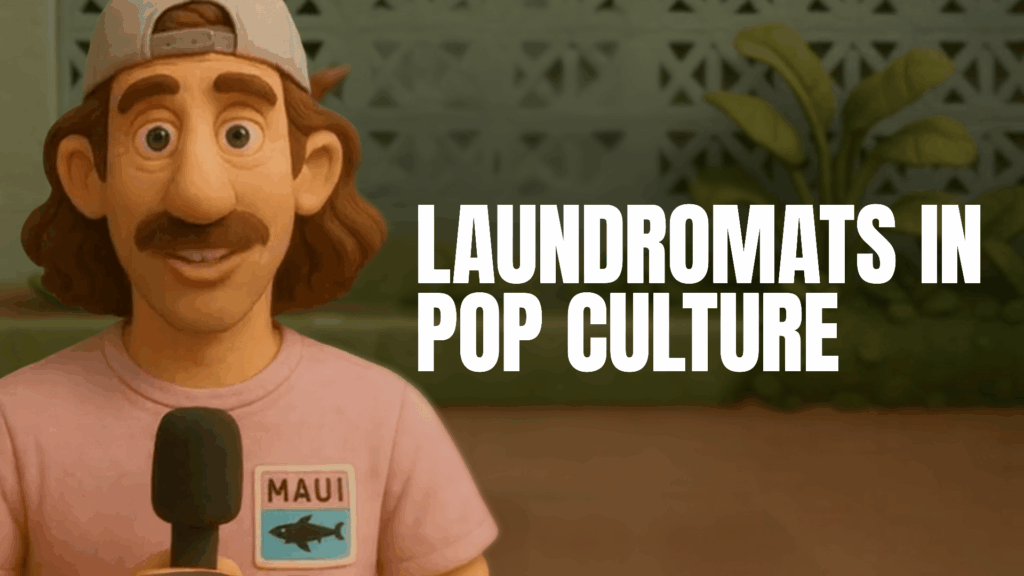
Welcome to Laundromat Resource! In today’s episode, host Jordan Berry spins us through the fascinating role of laundromats in pop culture. From the hum of fluorescent lights to the rhythmic spin of washers, laundromats are more than just pit stops for dirty laundry—they’re cinematic, emotional stages where stories unfold. Jordan explores why these humble spaces keep appearing in our favorite movies, TV shows, music videos, and novels—as backdrops for life’s pivotal moments, transformations, and unexpected connections.
We’ll dive into iconic scenes from films like Fight Club and Moonlight, memorable sitcom moments with Ross and Rachel in Friends, and even the metaphors baked into Breaking Bad. Laundromats, as Jordan reveals, are liminal spaces—transitions between jobs, relationships, and versions of ourselves, where authenticity and self-reflection take center stage. Whether filled with tension, tenderness, or laughter, laundromats mirror who we are in moments when no one’s looking.
So, grab your basket and settle in as we explore why laundromats remain powerful symbols in storytelling—and what they reveal about our humanity, one spin cycle at a time.
Key Takeaways:
Laundromats as Powerful Storytelling Spaces
Laundromats keep appearing in movies, TV shows, literature, and music because they’re visually and emotionally rich backdrops. They symbolize change, transition, and connection—or sometimes isolation. As a laundromat owner, it’s interesting to recognize that your business isn’t just a place to wash clothes; it’s also a stage where everyday stories unfold. This perspective could inspire you to see your space as more than just functional, possibly influencing how you design or market your services.Laundromats = Community, Diversity, and Authenticity
The episode points out that laundromats are democratic spaces—everyone, regardless of background, uses them. They’re public, yet oddly intimate, making them perfect settings for both drama and real-life connection. For owners, this reinforces the value of fostering a welcoming atmosphere and building a sense of community, which can set your business apart and encourage loyalty.Pop Culture Shapes Public Perception (and Opportunity)
Because laundromats are so meaningful in pop culture—connected to ideas of transformation, nostalgia, and even comedy—they can carry a sense of romance or authenticity in people’s minds. Owners can leverage this in their branding or local marketing. Think about collaborations with artists, film shoots, or themed events. Embracing the nostalgic or cinematic qualities highlighted in pop culture could help attract new customers and keep your laundromat relevant in a changing world.
In summary, this episode encourages laundromat owners to see their businesses as vibrant public spaces that capture people’s imaginations and play a unique role in local culture.
Watch The Podcast Here
Episode Transcript
Jordan Berry [00:00:00]:
Laundromats in pop culture why we keep telling stories here. There’s something quietly cinematic about a laundromat. Maybe it’s the fluorescent buzz, the rhythmic hum of washers spinning like miniature galaxies. Or the way people just wait in silence, staring off while their lives slosh around in circles behind a fogged glass. I’ve always found it strange and sort of beautiful that these places show up again and again in movies, TV shows, music videos, and even novels. Not just as background noise, but as emotional set pieces. In pop culture, the Laundromat isn’t just where clothes get clean. It’s where people unravel, transform or collide.
Jordan Berry [00:00:46]:
So let’s throw a load in the machine and sit with it for a while. Because today I want to explore why laundromats have become so such iconic stages in storytelling and what these slow, steamy, hummy rooms say about us. The spin cycle. Repetition, isolation in the liminal space. There’s a reason writers and directors love setting scenes in Laundromats. They’re inherently transitional. You’re not at work, you’re not at home. You’re just waiting.
Jordan Berry [00:01:18]:
They’re one of the last public spaces where we still sit still. No distractions, no timeline. You have time to think, to confront yourself, to feel awkward or invisible or profoundly alone. Perfect for stories that want to explore identity change or discomfort. They’re also deeply democratic. Everyone has dirty laundry. And whether you’re a broke college student or a cash stuffed criminal, your whites still need whitening. Let’s take a look at some films that feature laundromats.
Jordan Berry [00:01:51]:
Take Fight Club, one of the most famous laundromat scenes in modern cinema. Edward Norton’s unnamed narrator meets Marla Singer, the chaos to his order. While they’re doing laundry, he pulls a box of detergent out of the machine. It’s hers. An argument ensues. It’s awkward, tense, visceral. And of course it is. The Laundromat is a place where both characters are stripped down.
Jordan Berry [00:02:20]:
No Persona, no performance. Just mismatched socks and baggage, emotional and otherwise. The metaphor is almost too perfect. Fighting over soap while both hiding from their messier selves. Then there’s Moonlight, Barry Jenkins’s quiet masterpiece. In one of its most tender scenes, a young Chiron helps his mother with laundry. There’s no dialogue, just color, light, texture and pain. The Laundromat here isn’t gritty.
Jordan Berry [00:02:50]:
It’s soft, intimate. A rare moment of connection in a life marked by emotional distance. And who could forget Breaking Bad? Walter White literally launders money through a commercial laundry facility, hiding a meth lab beneath it. Here, the metaphor becomes deliciously literal. The idea of scrubbing things clean identities, reputations, guilt is baked into the storyline. Not all laundromats in pop culture are heavy, of course. Sometimes they’re just weird. You’re goddamn right.
Jordan Berry [00:03:22]:
In Friends, Ross and Rachel’s first date, quote, unquote, happens at a laundromat. She’s never done her own laundry before, and Ross is there to guide her. It’s awkward, sweet, and honestly, it’s kind of relatable. Or Seinfeld, where Kramer tries to get his clothes ultra dry by abusing industrial dryers. Working. It knows what it’s doing. Just let it finish, you’re gonna over dry it. Or Atlanta, where the laundromat is a setting for philosophical musing and sketchy side hustles.
Jordan Berry [00:03:51]:
These scenes work because laundromats are inherently awkward. You’re folding your underwear in public. It’s intimate and impersonal at the same time. A comedy writer’s dream. What I’ve noticed across all of these is that laundromats almost always signal change. They’re places where characters pause between jobs, between relationships, between versions of themselves. The rent cycle is more than metaphor. It’s a reset button.
Jordan Berry [00:04:19]:
In music, laundromats are everywhere. They’re the visual shorthand for authenticity and solitude. In Kendrick Lamar’s Sing About Me, the laundromat backdrop underscores everyday struggle and introspection. They’re cheap to shoot in, but they look incredible. Long rows of shiny machines, soft amber lights and that satisfying mechanical rhythm in the background. It’s visual poetry for under $100 an hour. And I would know because the film was filmed in one of my laundromats in la. In fictional literature, laundromats appear when authors want to slow the pace and let a character exist for a minute.
Jordan Berry [00:04:58]:
In Raymond Carver’s short stories, laudermats are filled with quiet dread. In poetry, they symbolize cycles, cleansing and futility. In novels like White Teeth and Middlesex, they become symbols of generational labor, of immigrants scrubbing their way into new lives. Laudermats haven’t disappeared from stories, even as more people have washers at homes. They’ve just shifted. Today, they’re more likely to be portrayed as places of memory, nostalgia or vulnerability. In older media, laundromats were gritty and transactional. Now they’re almost romantic, slow, analog.
Jordan Berry [00:05:37]:
They’ve become, in a sense, liminal spaces, places between places. I think that’s why we keep returning to laundromats in our stories. They’re mundane but meaningful, public but personal, ugly but cinematic. It’s where you might meet someone or realize something, or finally admit you’re out of detergent and out of excuses. The laundromat is a mirror, reflecting who we are when no one’s looking. And maybe that’s why it’ll always have a place in pop culture. Because long after the last coin drops, long after the last drier cycle ends, we’ll still need places like this. Places where we can sit, wait, and maybe, just maybe, come out a little cleaner than we went in.
Jordan Berry [00:06:22]:
As laundromats continue to evolve in a changing world, it’ll be fascinating to see what pop culture reflects back at us. These spaces have always been mirrors, sometimes foggy, sometimes unflinching, showing us who we are in life’s in between moments. Let’s hope future stories hold on to what’s best about the laundromat. The quiet reflection, the unspoken community. And, yes, maybe even a little awkward comedy. And maybe through these spinning machines and shared spaces, we’ll keep uncovering new truths about our humanity. Small, tender insights worth carrying with us long after the last load is done.
Resumen en español
En este episodio de “Laundromat Resource”, el anfitrión Jordan Berry explora la presencia recurrente de las lavanderías en la cultura pop y analiza por qué estos lugares suelen aparecer en películas, series, videos musicales y novelas, no solo como contexto, sino como verdaderos escenarios emocionales. Berry destaca cómo las lavanderías simbolizan espacios de transición, donde las personas esperan, reflexionan y, muchas veces, experimentan cambios en su vida.
A lo largo del episodio, se mencionan ejemplos icónicos como la escena de “Fight Club” donde los personajes se enfrentan en una lavandería, “Moonlight” con un momento tierno y silencioso, y “Breaking Bad” donde el lavado de dinero se vuelve literal en una lavandería industrial. También se hace referencia a momentos cómicos en “Friends” y “Seinfeld”, y reflexivos en “Atlanta”.
Berry analiza cómo estos lugares, aunque cotidianos y a veces incómodos, sirven como espejos en los que los personajes (y nosotros mismos) podemos vernos sin máscaras. Destaca su función democrática: todos, sin importar su trasfondo, tienen ropa que lavar. Las lavanderías aparecen también en la música y la literatura como símbolos de autenticidad, nostalgia, ciclos y trabajo generacional.
Finalmente, el episodio reflexiona sobre cómo estos espacios seguirán sirviendo de inspiración para futuras historias, representando momentos de pausa, cambio y comunidad en medio de la vida diaria. Las lavanderías, según Berry, seguirán siendo escenarios perfectos para descubrir verdades sencillas y humanas sobre nosotros mismos.


Links from the Show
Become a Laundromat Pro & Join the Pro Community!
Unlock the secrets of laundromat success! Join our Pro Community now to access expert insights, exclusive resources, a vibrant community, and more.